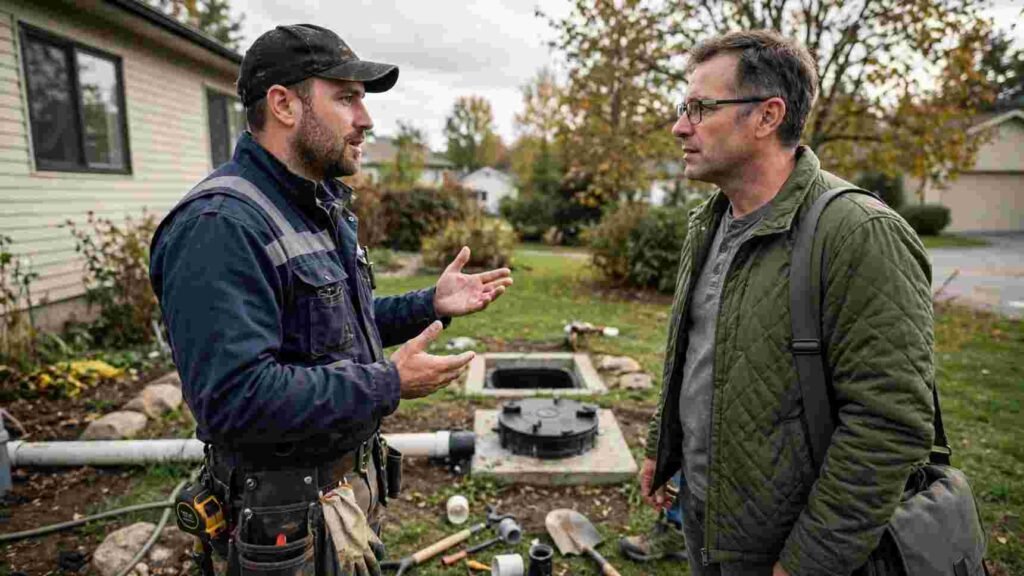
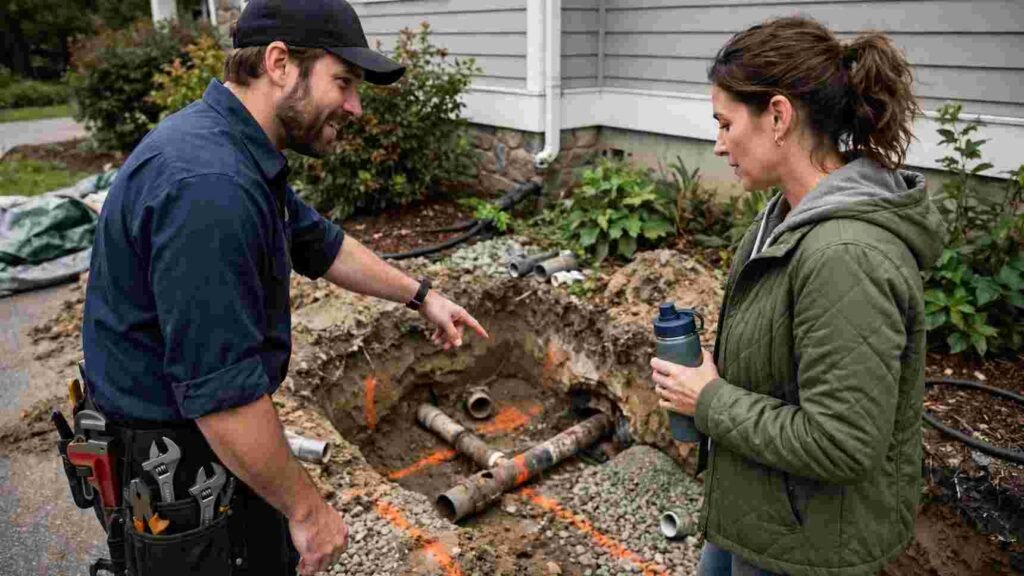
A suspected water line problem is easier to discuss when you can describe what changed and when. Low pressure, an unusual wet area, or a higher water bill may justify an investigation, but none identifies the cause on its own. The first goal is to give a plumber useful observations without turning them into a diagnosis.
Record whether the issue affects the whole home or only one fixture. Note when you first noticed it and whether it is constant or intermittent. If a utility notice or recent excavation may be relevant, save that information as well.
Collect observations safely
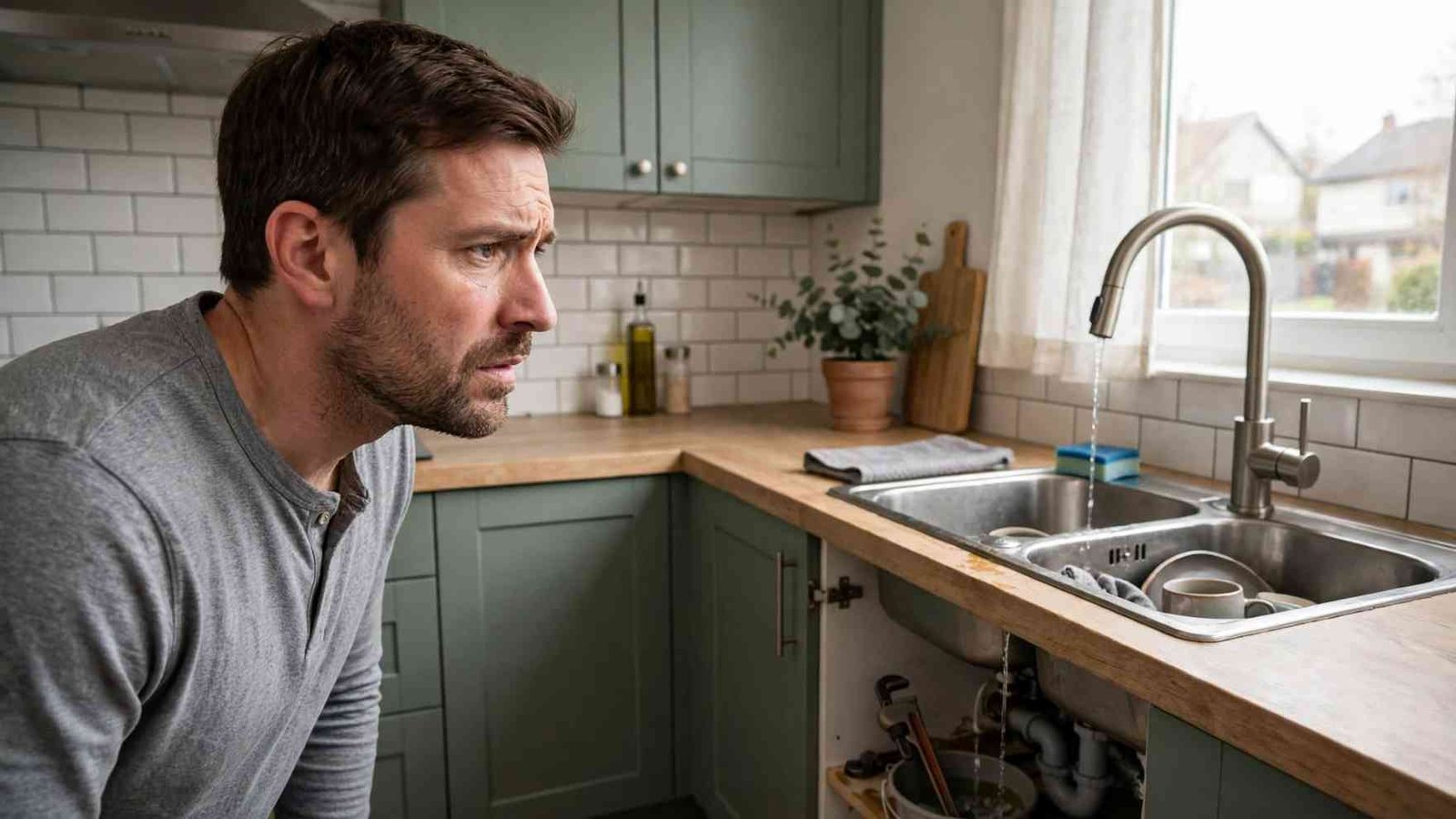
Take photographs of visible wet areas from a safe location and record meter or billing information you can access normally. Do not excavate, enter an unsafe space, or disturb a suspected utility line to get a better picture. Contact the utility or an appropriate professional when the situation may involve their equipment.
When documenting a suspected water line issue, also note any nearby electrical equipment or wiring that could be affected by moisture, and avoid approaching wet areas where electrical hazards may be present. Understanding the role of electrical safety devices for homes can help homeowners recognize the importance of electrical protection while arranging professional inspections.
Before requesting water line repair in South Jordan, prepare a short timeline and ask what additional information would help. Clarify whether the suspected area is on the utility’s side or the property’s side of responsibility; the provider may need to verify that distinction. Useful notes can help guide the inspection, while the repair recommendation should follow an assessment of the actual condition.
A concise report might say that pressure dropped at every fixture on a particular morning, while a damp area appeared near the driveway two days later. That is more useful than reporting that the underground line has definitely failed. Keep the observations separate, because the plumber may find that they are related or have different causes.
If the bill changed, save the statement and compare the billing period rather than quoting only the amount due. Ask whether the utility has information relevant to the issue. Before authorizing excavation, request an explanation of the investigation and the responsibilities involved. The aim is to establish the location and cause before choosing a repair, especially given broader issues with aging drinking water systems.
Make the scope visible
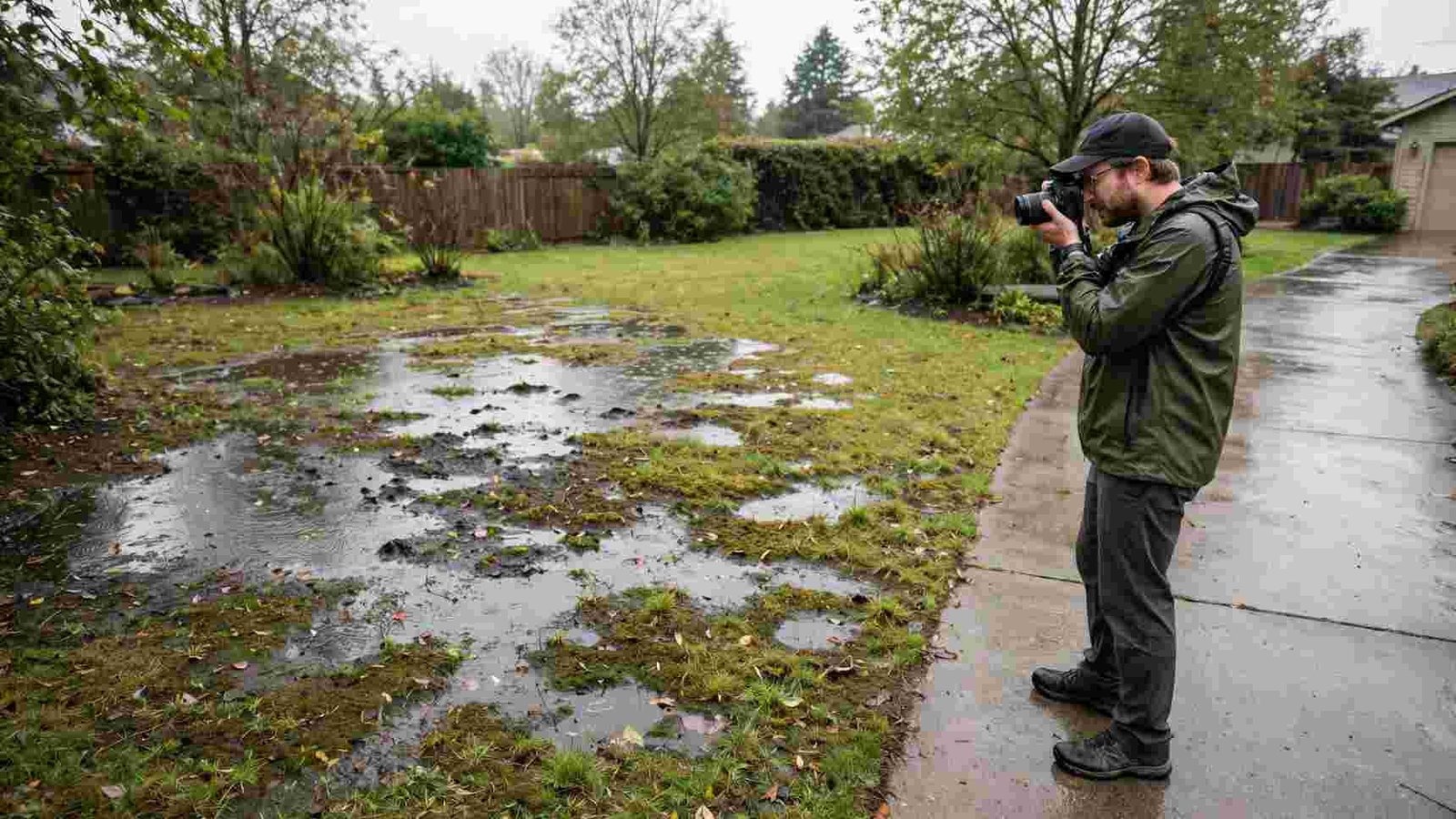
Before approving work, ask for a description of what will be inspected, repaired, replaced, and left alone. Photos and measurements help, but they do not reveal every concealed condition. A proposal should explain which assumptions depend on further inspection and how discoveries will be handled.
When assessing possible water line damage, it is also useful to understand how the home’s exterior helps protect it from moisture and weather exposure. Learning how roofing and siding protect your home can help homeowners consider related exterior conditions when documenting visible damage and planning repairs.
Keep functional requirements separate from appearance preferences. The first group may include water management, safe access, or compatibility with existing materials. The second may include color or finish. Both matter, but knowing the difference makes it easier to preserve essential work if the budget needs adjusting.
Compare the work behind the price
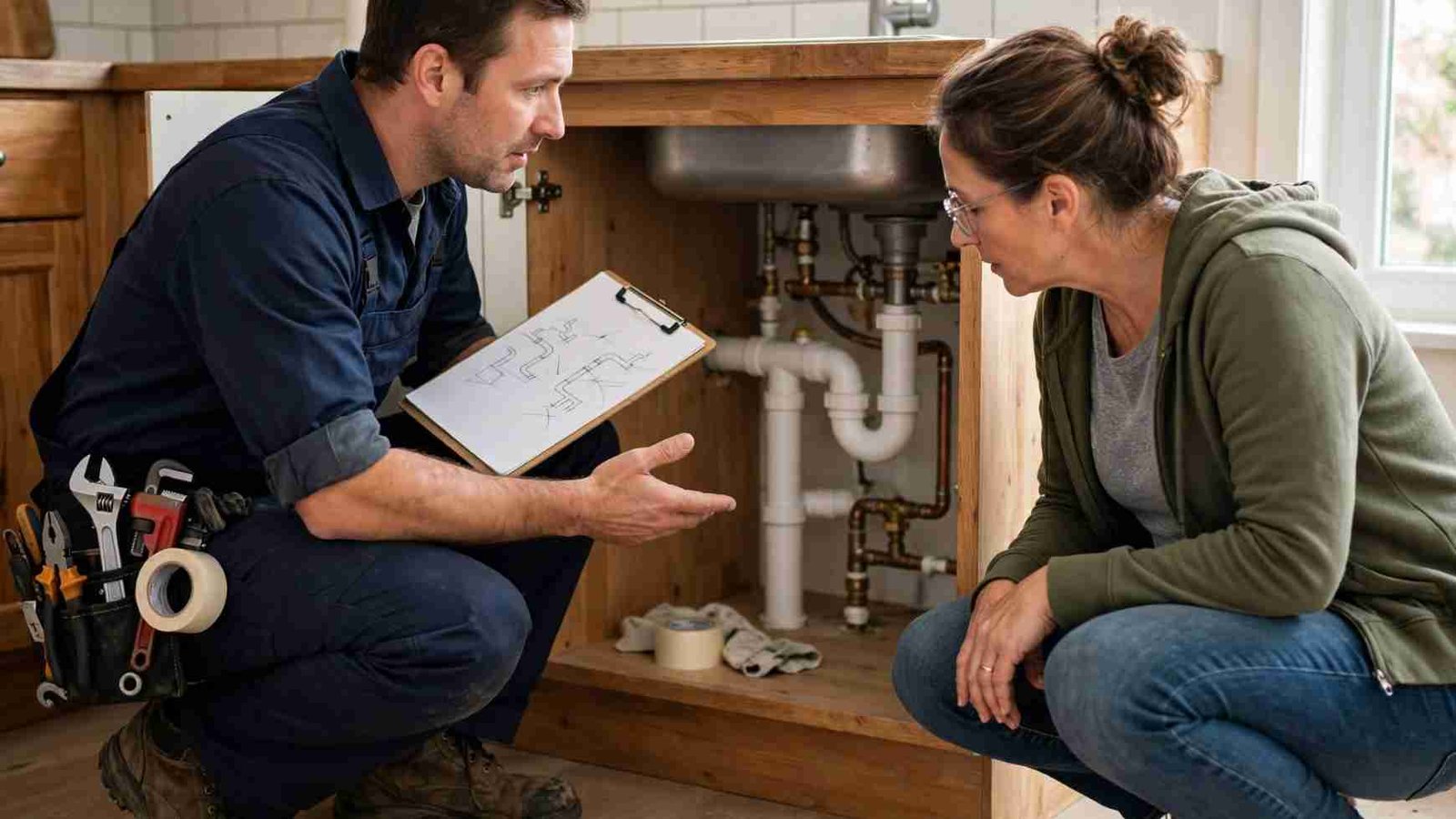
Two prices are difficult to compare when they describe different jobs. Check whether preparation, protection of nearby surfaces, disposal, and restoration are included. Ask who coordinates related trades and whether required permits or inspections are part of the quoted scope. Requirements depend on the work and location.
When water line repairs are part of a broader home improvement project, coordinating the work with planned upgrades can help homeowners manage costs and avoid repeating restoration work. Exploring these ideas for stunning kitchen makeovers can help homeowners plan kitchen improvements alongside necessary plumbing work.
Discuss access and household disruption as well. Contractors may need clear pathways, parking, or temporary use of utilities. Pets, children, and work-from-home schedules can affect daily arrangements. Addressing these details before work begins gives everyone a clearer understanding of what the project involves beyond the finished result.
Keep a short project checklist
- Record the existing condition with dated photographs from safe locations.
- Save the agreed scope, product details, and relevant drawings together.
- Ask how changes will be priced and approved before additional work.
- Confirm who will answer questions while the work is underway.
- Request care instructions and applicable warranty documents at completion.
Plan for the completed work

Ask what routine care the finished work will need and which early signs should prompt a follow-up call. Some materials require specific cleaners or maintenance methods. Other components need periodic inspection rather than frequent treatment. Written instructions are easier to follow than a brief conversation during cleanup.
Before the final walkthrough, compare the completed work with the agreed scope and note any unresolved items. Keep photographs of concealed work when available, along with invoices and product information. These records can help with future repairs or changes. A successful project leaves the homeowner with both a functional result and enough information to look after it responsibly.
Ask what conditions would make the proposed approach unsuitable. A responsible explanation may identify damage that cannot be evaluated until an area is opened or an existing component is removed. Agree on the point at which work would pause for a new decision. Keeping that boundary clear is especially useful when several repairs depend on each other. It lets the homeowner understand the limits of the initial proposal without treating every unknown as a reason to approve additional work in advance.
Contact 1st American Plumbing to arrange an assessment and share the observations you recorded about the suspected water line problem.