When a furnace runs for a few minutes and shuts down before the house warms up, the repeated cycling deserves attention. A dirty filter, airflow restriction, control problem, or equipment sizing issue may be involved. The pattern gives a technician a starting point for finding the cause.
For homeowners in northern Utah, this pattern can show up right when heating demand is highest. The result is the same whether the issue is minor or serious: uneven comfort, higher wear on the equipment, and less confidence that the system is safe. That is why Efficient Systems Heating and Cooling treats short-cycling as more than a nuisance. It is a symptom, not the diagnosis.
Short-Cycling Is Usually a Protective Response, Not a Random Failure
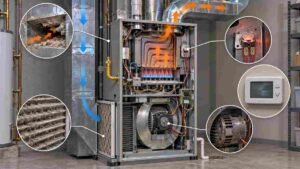
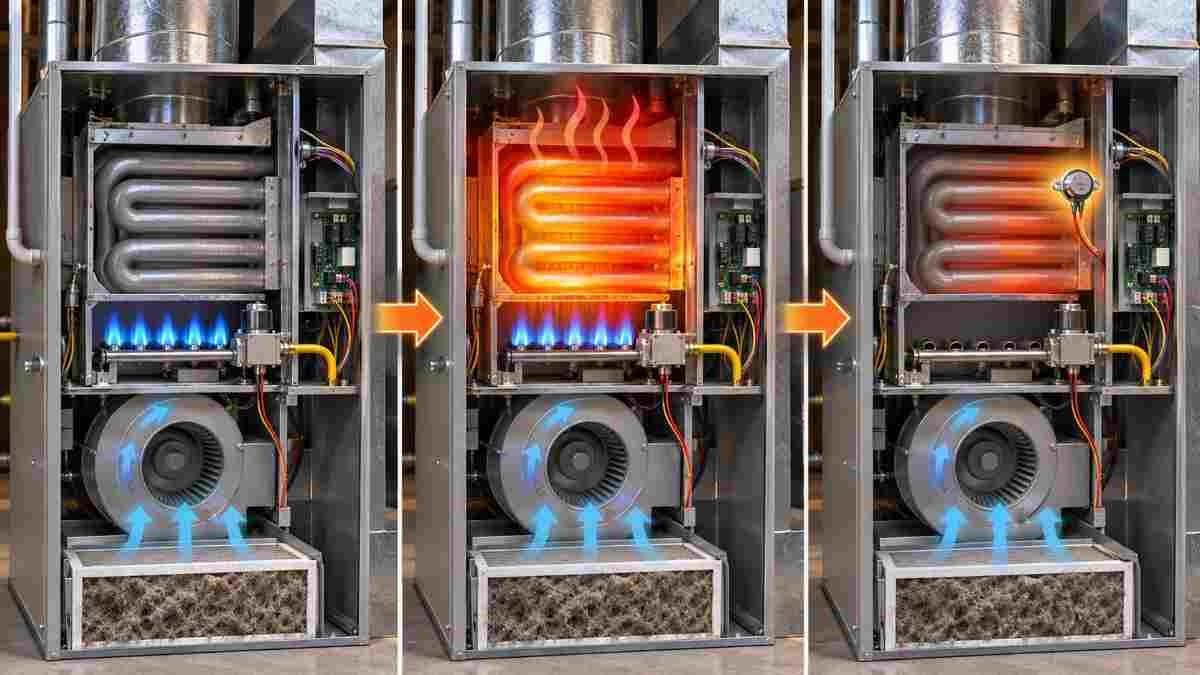
A furnace does not typically shut itself down for no reason. In many cases, the control system is reacting to heat buildup, airflow imbalance, or a safety condition. When a furnace overheats, a safety limit switch may trip and stop the burner cycle before the heat exchanger or surrounding components are stressed further. That shutdown can happen again and again until the root cause is addressed.
This is where many homeowners get misled by the symptom. The furnace may still “work” in the sense that it produces some heat. But if it cannot complete a normal heating cycle, the system is not functioning correctly. Efficient Systems Heating and Cooling approaches this kind of problem by tracing why the furnace is shutting down instead of focusing only on the shutdown itself.
The Most Common Triggers Behind Repeated Shutdowns
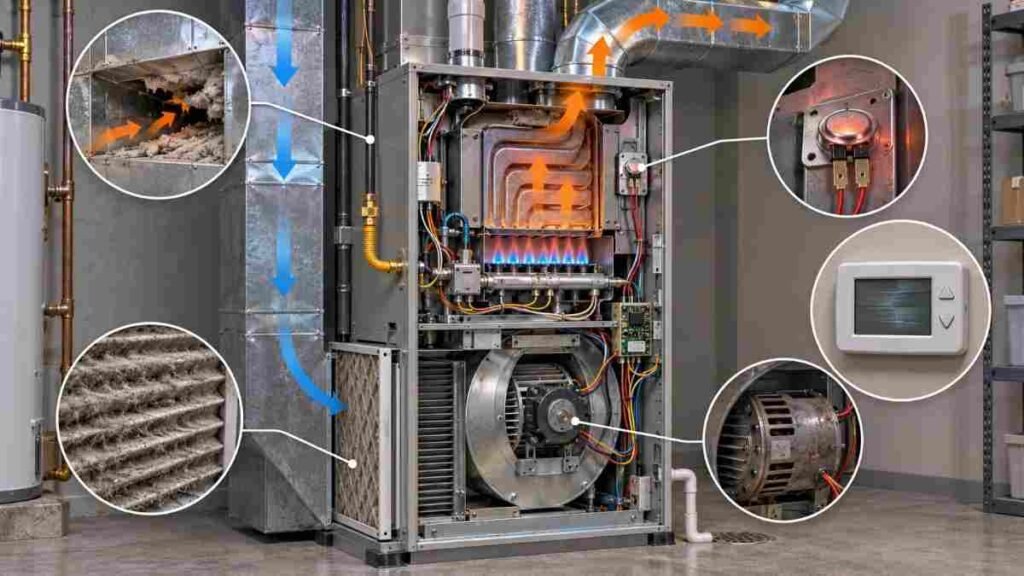
A short-cycling furnace often has one of a few issues behind it. The exact cause matters because each one points to a different repair path.
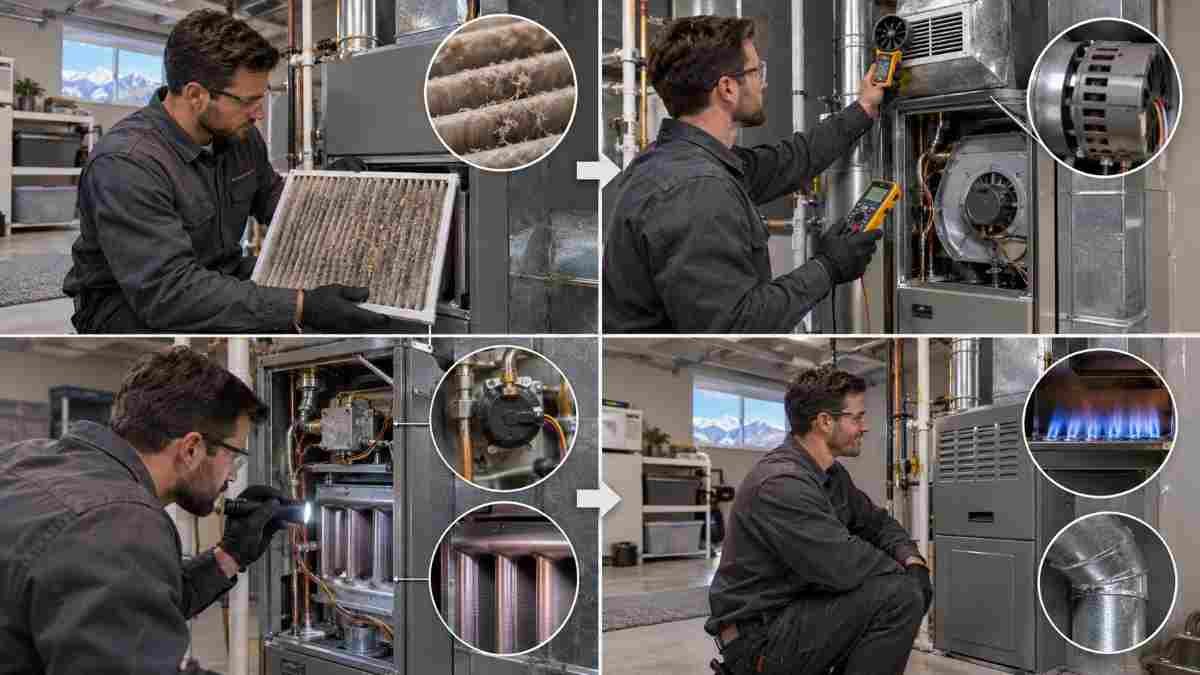
- Airflow blockage from a dirty filter, blocked return, or restricted ductwork
- A blower motor that is failing or not moving enough air
- A safety limit switch that is responding to overheating
- Heat exchanger concerns that require immediate professional evaluation
- Thermostat issues that make the furnace cycle at the wrong time or too often
- Flame sensing or control problems that interrupt normal operation
These issues can look similar from the outside. The furnace starts, runs, stops, and repeats. But the correct repair depends on which condition is actually causing the interruption.
Why Short-Cycling Matters Beyond Comfort
The obvious problem is that the house never fully warms up. But the deeper issue is that short-cycling can shorten equipment life and create new failures. Every start-up places stress on electrical and mechanical components. If the furnace is repeatedly stopping before it reaches a normal cycle, those stresses accumulate faster than they should.
A system that is constantly cycling also wastes efficiency. Instead of delivering a steady heating pattern, it spends time ramping up and shutting down. That creates temperature swings from room to room and can make the house feel drafty even when the thermostat appears to be calling for heat. Over time, the homeowner may notice more frequent service calls and a higher likelihood of a larger breakdown if the underlying issue is ignored. Reliable heating also supports stunning kitchen makeovers and everyday comfort.
For households concerned about safety, the stakes are even higher. Repeated overheating can point to airflow restriction or internal damage, and those are not conditions to brush aside. In that sense, a furnace that cannot stay on long enough to heat the home is often asking for attention before a more serious fault develops.
What Strong Furnace Diagnostics Actually Look For
The difference between a quick guess and a proper diagnosis is significant. A good technician does not just reset the furnace and see whether it behaves for a few minutes. A proper inspection follows the chain of cause and effect: what is making the furnace shut down, and what failed upstream?
Efficient Systems Heating and Cooling uses diagnostic checks designed to isolate the problem before work begins. That matters because a short-cycling complaint can involve several different systems at once. A clogged filter may be part of the picture, but not the whole story. A weak blower may exaggerate an airflow issue. A faulty limit switch may be reacting correctly to another hidden fault.
The Difference Between Symptoms and Root Causes
A homeowner may see one symptom while the furnace is dealing with another issue entirely. For example, warm air for a short period does not mean the combustion side is healthy. It may simply mean the furnace is running long enough to heat the air briefly before overheating or tripping a limit switch.
The same is true of thermostat complaints. The thermostat may appear to be the issue because the furnace shuts off early, but the real cause may be an airflow restriction or heat exchanger problem. That is why a careful diagnosis is worth more than repeated resets or temporary fixes.
Why Efficient Systems Heating and Cooling Focuses on Safety and Clarity
In a heating repair, confidence comes from process. Efficient Systems Heating and Cooling is built around a practical, safety-first approach: inspect the system, identify the cause, explain the repair, and complete post-repair testing before wrapping up the job. That approach matters because furnace problems are often layered. A technician may need to check the safety switches, inspect airflow conditions, and evaluate the blower motor or related components before making a recommendation.
The company also provides upfront written estimates before repair work begins. That helps homeowners make decisions without pressure. In a situation where the furnace keeps starting and stopping, clarity is useful. A homeowner needs to know whether the repair is likely to stabilize the system, improve heating output, or reveal a larger issue that should be addressed now instead of later.
This is where local experience matters too. Efficient Systems Heating and Cooling serves Murray and the surrounding Salt Lake area with a focus on practical repairs, not dramatic upselling. That is especially important when the furnace is still partly functioning. A homeowner needs honest guidance about repair versus replacement, not a sales pitch built on uncertainty. Preventive HVAC maintenance supports effective property investment strategies and long-term value.
What Homeowners Should Pay Attention To Before Calling for Service
You do not need to diagnose the furnace yourself to notice useful clues. A few observations can help a technician get to the answer faster and may reveal whether the issue is becoming more severe.
Pay attention to whether:
- The furnace shuts off after a very short run and then restarts soon after
- The airflow from the vents feels weak or inconsistent
- The blower continues after the burner shuts down
- The thermostat is satisfied even though the house still feels cold
- The furnace makes repeated startup attempts before it runs normally
- The problem appears worse during the coldest part of the day
These details do not replace a professional inspection, but they help frame the issue. A furnace that short-cycles once may be annoying. A furnace that does it repeatedly is telling you that something in the system is not operating correctly.
If you are looking for furnace repair in Murray, Utah, the most important thing is to choose a company that treats the symptom as a diagnostic starting point, not the whole story. That is the difference between a fast reset and a repair that restores reliable heat.
The Real Goal Is Stable Heat, Not Just a Furnace That Turns On
A furnace that starts and stops before the house warms up is not simply inefficient. It is incomplete. It may be overheating, struggling with airflow, responding to a failing switch, or dealing with a mechanical issue that will only worsen with time. The right response is a careful inspection that traces the problem to its source and confirms the system is safe before it is returned to service.
That is the standard Efficient Systems Heating and Cooling brings to furnace repair: clear diagnosis, honest repair guidance, and testing that verifies the furnace is heating properly again. When the house is still cold after the furnace has been running, that is the moment to stop guessing and get the system checked by a professional who understands how the whole heating cycle fits together.