Flaking brick, crumbling mortar, and recurring damp patches can be signs that water is entering a wall faster than it can dry. Finding the source of that moisture is an important part of masonry restoration in Utah. Repairs are more likely to hold when the conditions behind the damage are addressed.
Brick and mortar are not meant to behave like sealed plastic. They are porous, which means they can absorb water and release it again. That breathability is part of what makes traditional masonry durable. Trouble begins when moisture is trapped inside the wall assembly by damaged joints, cracks, dense coatings, or repeated exposure that outpaces drying. Once moisture lingers, it starts a chain reaction of deterioration.
Abstract Masonry approaches this issue as a preservation problem first and a repair problem second. If the source of trapped moisture is not addressed, repairs may look good for a season and then fail again. A sound restoration strategy has to identify how water entered, where it is held, and what is preventing the wall from drying naturally.
What Trapped Moisture Actually Does Inside Brick and Mortar
Water does not need a dramatic leak to cause damage. A wall that repeatedly takes on moisture from rain, snow, runoff, or condensation can absorb enough water over time to weaken the masonry from within. The visible damage is only the final stage.
Freeze-Thaw Cycling Breaks Materials Apart
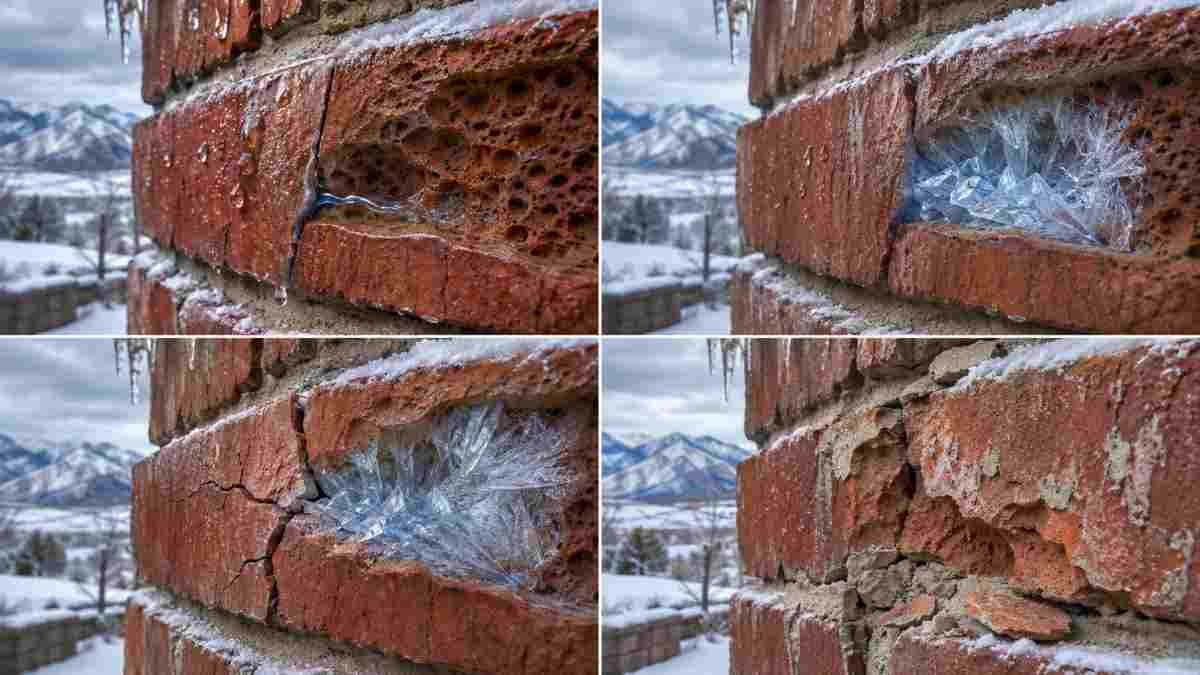
When water enters a brick or mortar joint and temperatures drop, the water can freeze and expand. That expansion creates internal stress. Over time, repeated freeze-thaw cycling can cause face spalling on bricks, crumbly mortar, and widening cracks. Even a small entry point can become a larger failure if it keeps accepting moisture through the seasons.
This is one reason historic masonry is so vulnerable. Older brick walls were often built with softer materials and lime-based mortars that can be durable, but only when they are allowed to function as intended. Once moisture is trapped, the wall becomes a system under pressure.
Salts Leave a Visible Warning
Moisture often carries dissolved salts through the masonry. As water moves to the surface and evaporates, those salts can crystallize. The result may be white efflorescence, staining, or crusting on the face of the brick. That residue is more than cosmetic. Salt movement can also contribute to surface breakdown and mortar erosion.
When Abstract Masonry evaluates moisture-related deterioration, these visible clues help tell the story of what is happening behind the wall. The stain is not the whole problem. It is the evidence.
Mortar Joints Usually Fail First
Mortar is typically the sacrificial element in a masonry wall. It is designed to be more workable and more replaceable than the brick itself. But when joints erode too deeply, water finds easy routes into the wall. Open joints also reduce the wall’s ability to shed water effectively.
That is why repointing matters. A well-matched mortar repair does more than improve appearance. It helps restore the wall’s ability to resist water intrusion while preserving the character of the original masonry.
Why Breathability Matters More Than a Surface Seal
Many moisture problems get worse when someone tries to “fix” them with a coating that blocks evaporation. The instinct is understandable. If water is getting in, it seems logical to stop it with a film. But masonry is not a substrate that benefits from being sealed shut.
Breathability allows vapor to escape. Without it, moisture can remain locked in the wall, where it keeps doing damage long after the rain has stopped. That is why Abstract Masonry emphasizes water repellents that protect against intrusion without sacrificing breathability or altering masonry color.
A breathable treatment can be appropriate when applied for the right reason and to the right surface. The goal is not to create a plastic barrier. The goal is to reduce water uptake while still allowing the wall to dry. That approach is especially important in historic work, where preserving original material is often better than replacing it.
For anyone researching masonry restoration in Utah, this distinction is worth understanding clearly. Not every moisture problem calls for the same response, and not every product that blocks water is actually helping the building. These daily home habits for better living encourage consistent property care.
The Repairs That Solve the Cause Instead of the Symptom
Good masonry work starts with diagnosis. A crack in a brick wall might be a localized issue, or it might be a sign of movement, failed flashing, or chronic saturation. The repair has to match the cause.
Repointing Restores the Wall’s First Line of Defense
When mortar joints are deteriorated, repointing can restore the joint profile and reduce water entry. The important part is matching the new mortar to the existing masonry in strength, texture, and appearance. If the replacement mortar is too hard or too dense, it can shift stress into the brick instead of relieving it.
Abstract Masonry’s historic focus is especially relevant here. Matching old mortar is not just about aesthetics. It is part of respecting how the wall was originally built and how it needs to perform today.
Crack Repair Needs More Than Patchwork
Not every crack should be filled the same way. Some cracks are surface-level. Others indicate structural movement or separation that needs a more deliberate repair method. In some cases, crack stitching or other targeted repair techniques may be appropriate to stabilize the wall before cosmetic work is completed.
The key is not to hide the crack and move on. The best repair reduces the chance that water will continue entering through the same failure point.
Paint Stripping Can Be Necessary
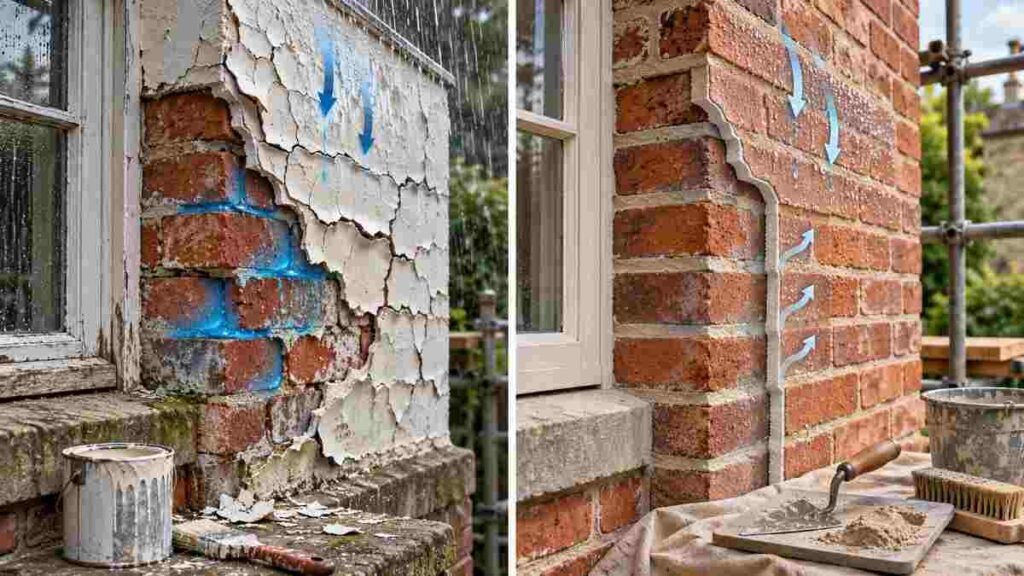
Impermeable coatings, including some paints and dense surface finishes, can trap moisture in brick and mortar. When that happens, the coating becomes part of the problem. Removing it may be necessary so the wall can breathe and dry properly again.
This is one of the more overlooked aspects of preservation work. People often see peeling paint as a surface issue, when it is actually a warning that the masonry beneath it is struggling.
What Building Owners Should Watch For Before Damage Spreads
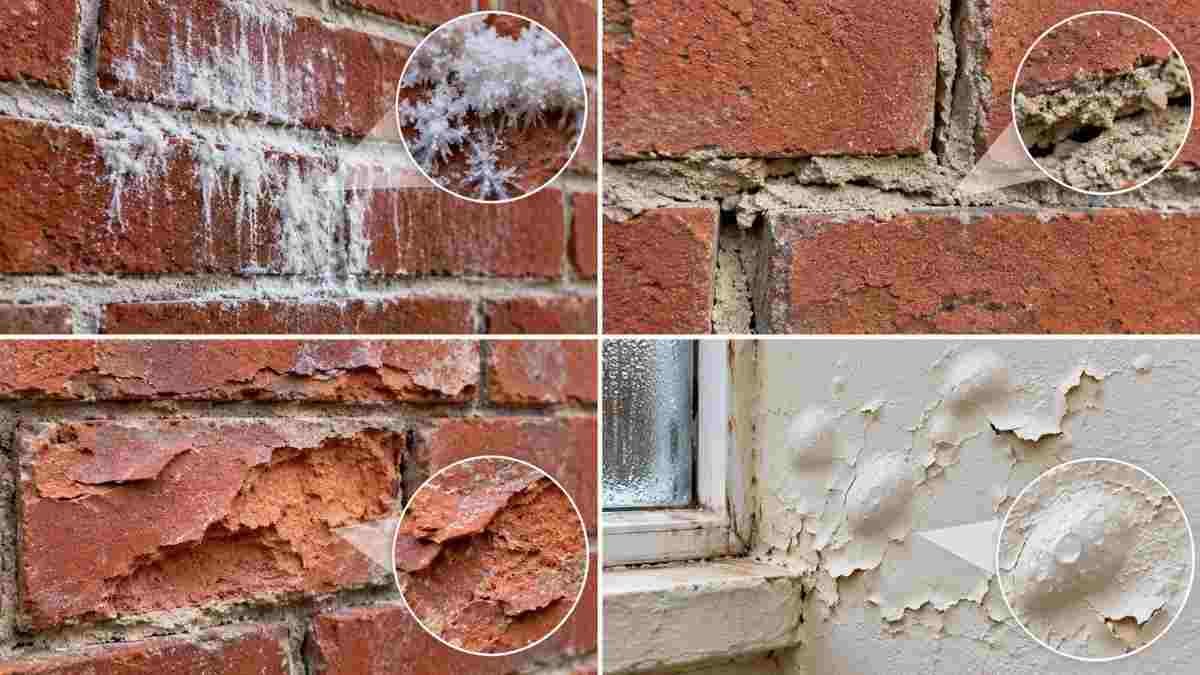
Moisture damage rarely appears as one dramatic event. It usually arrives through a pattern of small signs that become more serious with time. Property owners who recognize the pattern early can avoid larger repairs later.
A few practical warning signs include:
- Repeated efflorescence or white mineral deposits
- Mortar that is soft, sandy, cracked, or missing
- Bricks that are flaking, spalling, or visibly damp
- Interior staining that appears near exterior walls or chimneys
- Peeling paint or blistering coatings on masonry surfaces
- Cracks that return after being patched
- Musty odors or dampness near lower walls and basements
These signs do not always mean the same thing, but they do mean the wall deserves attention. The longer moisture remains in the system, the more likely it is to cause deeper material loss and more extensive restoration work. Homeowners exploring smart home energy saving tips can also prioritize moisture management.
Abstract Masonry’s role is often to separate the symptom from the source. That matters because the wrong repair can mask a leak while allowing the wall to keep deteriorating.
Preservation Thinking Produces Better Long-Term Outcomes
Historic masonry is not disposable. Once original brick or mortar is lost, replacing it perfectly is difficult, and sometimes impossible. That is why the strongest restoration strategy is usually the one that protects what is already there.
Abstract Masonry’s work reflects that mindset. By focusing on breathable protection, careful mortar matching, crack repair, chimney restoration, and the removal of moisture-trapping coatings, the company treats the wall as a living system rather than a flat surface. That is the right way to think about masonry that has been exposed to years of weather and repeated wetting.
The long-term lesson is simple. Trapped moisture is not just an inconvenience, and it is not just a maintenance issue. It is one of the main forces that breaks down brick and mortar over time. Buildings last when they can dry, breathe, and shed water the way they were meant to. If a wall is showing signs of moisture damage, the smartest next step is a careful assessment and a repair plan that addresses the cause, not just the visible wear.