
The first time I tried working from a new city, I remember staring at my laptop in a crowded café, juggling a weak internet connection, background noise, and a meeting starting in five minutes. It didn’t feel like freedom—it felt chaotic.
That moment changed how I approached working while traveling. I stopped chasing the “perfect lifestyle” idea and started building something that actually worked in real life.
Now, every trip follows a system. I know where I’ll work, how I’ll manage my time, and when I’ll unplug to explore. The difference is huge—I’m no longer trying to survive my workdays while traveling. I’m in control of them.
If you’ve ever wondered how to stay productive without sacrificing the experience, this is the approach that turned everything around for me.
What Does Working While Traveling Really Mean Today?
The idea has evolved far beyond the typical digital nomad image. Today, it includes remote employees, freelancers, consultants, and even professionals transitioning from traditional office roles.
For me, it means treating travel as an extension of my work environment. I still explore new places, but I build my days around deadlines, meetings, and focused work sessions. That shift in mindset is what makes everything sustainable.
What Are the Most Common Ways to Work While Traveling?

There are several proven ways to make this lifestyle work, and I’ve either tried or seen each of these succeed.
Remote employment is one of the most stable options. Many professionals now transition their 9-to-5 roles into fully remote setups or find opportunities through platforms like FlexJobs and LinkedIn. This provides consistent income while allowing location flexibility.
Freelancing is another popular route. Skills like writing, graphic design, web development, and marketing can be offered through platforms such as Upwork and Fiverr. This path gives more control over workload and schedule.
Teaching English is often an entry point for beginners. With a TEFL certification, platforms like VIPKid or Preply allow you to teach students online while traveling.
Work exchanges provide a different approach. Programs like Workaway, Worldpackers, and WWOOF let you trade a few hours of work for accommodation and meals, which reduces expenses significantly.
There are also specialized travel jobs such as flight attendants, travel nurses, tour guides, or content creators. These roles naturally combine work and travel, making them a strong fit for this lifestyle.
What Are the Biggest Challenges You Need to Prepare For?
The biggest challenges are not always obvious until you experience them.
Internet reliability is the first issue. I’ve learned to never assume Wi-Fi will be stable, especially when important work depends on it.
Time zone differences can disrupt your routine. If your team or clients are based in the US, your schedule may shift significantly depending on your location.
Burnout is another common problem. Trying to work full-time while constantly exploring new places can quickly drain your energy if you don’t pace yourself.
Recognizing these challenges early helps you plan better and avoid unnecessary setbacks.
How Do I Choose the Right Destinations for Remote Work?
Not every location supports productivity, and choosing the wrong one can make everything harder.
I focus on destinations with reliable internet, coworking spaces, and easy access to essentials. Cities with strong digital infrastructure tend to be more predictable and work-friendly.
Time zone compatibility is also important. When I work with US clients, I choose locations where the time difference is manageable so I can maintain a consistent routine.
Walkability and convenience matter more than people expect. Staying close to cafes, grocery stores, and workspaces reduces daily friction and keeps everything efficient.
What Tools and Setup Make Working While Traveling Easier?
Your setup directly affects how smoothly your workday goes.
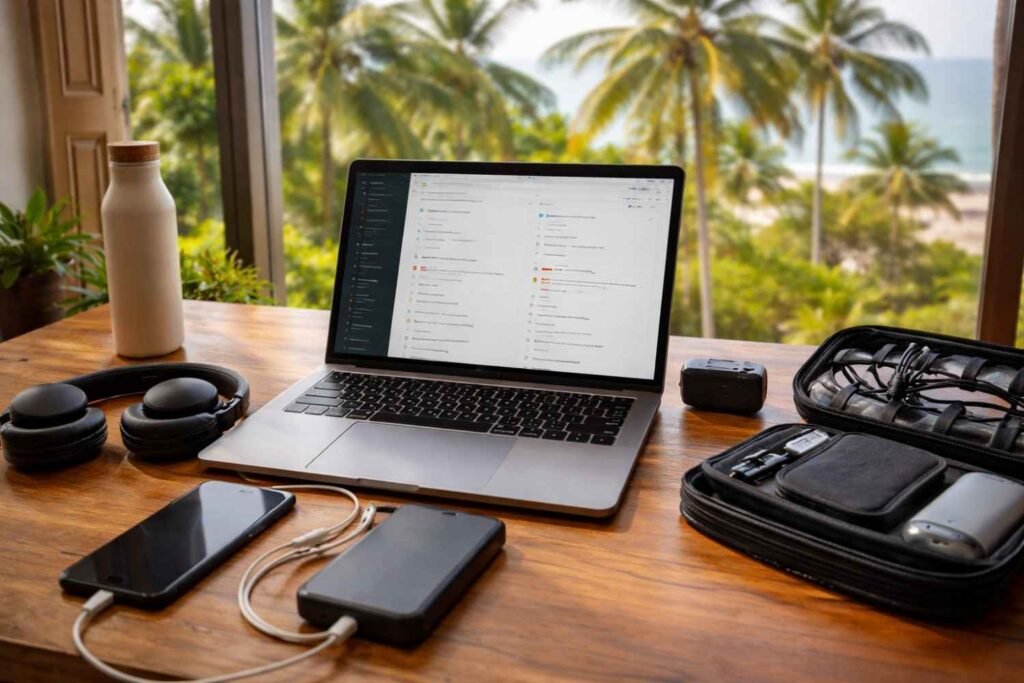
I always carry a lightweight laptop, noise-canceling headphones, a power bank, and a universal adapter. These are essentials I never travel without.
Connectivity is critical. I check Wi-Fi speeds before booking accommodations and often carry a portable hotspot or eSIM as a backup.
For organization, I rely on tools like Notion or Trello to manage tasks and travel plans in one place. Keeping everything structured helps me stay focused even when I’m constantly changing locations.
How Do I Manage Time Zones, Meetings, and Workdays Efficiently?
Managing time effectively is what separates a stressful experience from a smooth one.
I align my schedule with my clients or team, especially when working with US-based businesses. This often means working mornings or evenings depending on where I am.
I also block my calendar to avoid meeting overload. Too many calls across time zones can quickly lead to fatigue.
Travel days are always treated as buffer days. I avoid scheduling important tasks or meetings when I’m in transit because delays and disruptions are unpredictable.
How Can I Build a Routine That Actually Works on the Road?
A consistent routine is what keeps everything stable.
I start my workday at the same time regardless of location. That habit helps me stay disciplined and reduces decision fatigue.
I also separate work from exploration. Once my work is done, I fully switch off and enjoy the destination without distractions.
This balance makes the lifestyle sustainable and prevents burnout over time.
How to Start Working While Traveling Step by Step
Starting this lifestyle requires a clear and structured approach.
First, secure a reliable income source. Whether it’s a remote job or freelancing, stability comes first.
Next, choose a destination that supports remote work. Look for strong internet, good infrastructure, and convenient living conditions.
Then, organize your tools and workspace setup before leaving. Testing everything in advance avoids unnecessary issues later.
Finally, set a clear schedule and communicate your availability with clients or employers. Treat your work hours seriously, even while traveling.
What Legal and Financial Factors Should You Consider?

This is often overlooked but extremely important.
I always check visa requirements before traveling. Many countries now offer digital nomad visas, which make long-term stays easier.
Understanding tax obligations is also essential, especially for US citizens who may have reporting requirements even while abroad.
Travel insurance designed for remote workers, such as Safety Wing, provides added protection and peace of mind.
FAQs About Working While Traveling
1. Is working while traveling realistic long-term?
Yes, as long as you maintain a structured routine, reliable income, and proper planning. Consistency is key.
2. What is the best job for working while traveling?
Remote jobs, freelancing, teaching online, and digital services offer the most flexibility and stability.
3. How do I stay productive while traveling?
Focus on routine, minimize distractions, and plan your work schedule around your environment and time zone.
4. Do I need special visas to work while traveling?
In many cases, yes. Digital nomad visas and local regulations vary, so always check requirements before traveling.
Making This Lifestyle Actually Work
At first, I thought this lifestyle would feel chaotic. But once I built systems around it—including planning for unexpected situations like emergency travel—everything changed.
Working while traveling is not about doing more—it’s about doing things intentionally. When you combine the right income stream, tools, planning, and routine, you create a lifestyle that is both productive and fulfilling.
That’s what makes it sustainable—and far more rewarding than I expected.