
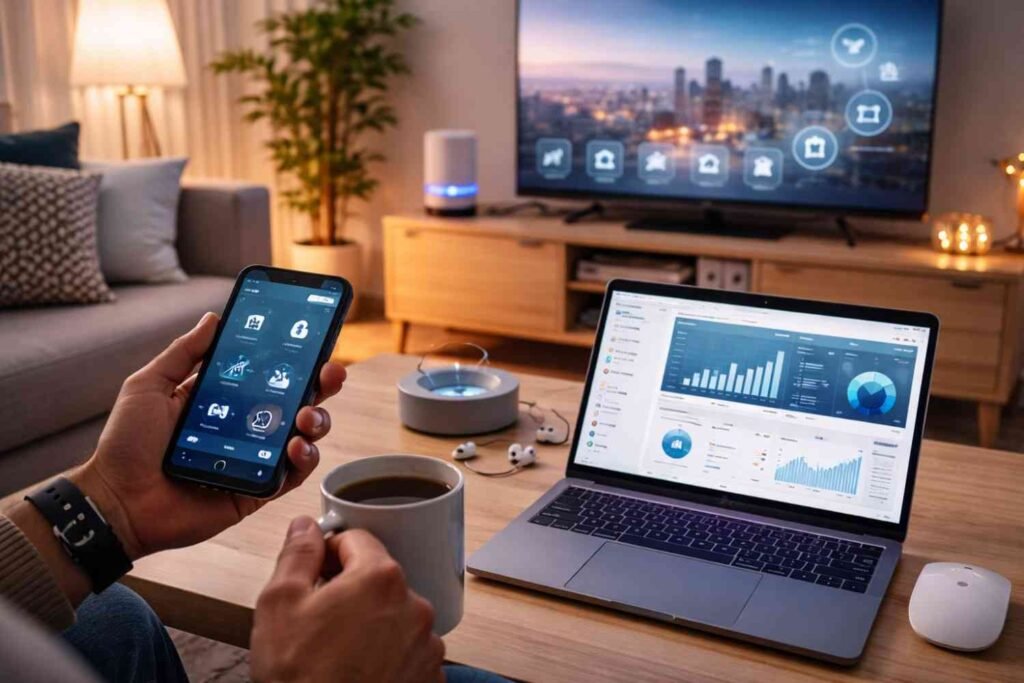
There was a time when technology demanded attention. New apps, constant notifications, endless updates, it all felt loud. You had to learn it, manage it, and adapt to it. Now, things feel different. You don’t always notice the tech anymore, but it’s working in the background, quietly adjusting things before you even think about them.
I started noticing this shift in small ways. My playlist changes based on my mood. Navigation reroutes before I hit traffic. Even emails feel pre-drafted in my tone. It’s subtle, almost invisible. That’s where the real shift lies, tech shaping the digital future isn’t about what’s visible anymore. It’s about what works without asking.
When Technology Stops Asking for Attention

The biggest change isn’t smarter devices, it’s less interaction. Technology is moving from something we actively use to something that quietly supports us.
This shift is often described as ambient computing, where digital systems blend into physical environments. Instead of opening apps or issuing commands, systems anticipate intent. Devices learn patterns, behaviours, and preferences, then act on them.
By the next phase of digital evolution, a significant portion of interactions won’t involve screens at all. That means fewer taps, fewer searches, and fewer decisions.
What’s interesting is how natural it feels. You don’t feel like you’re using advanced technology. It just feels like things are working the way they should.
The Core Shift Behind Tech Shaping Digital Future

At the centre of this transformation are a few quiet but powerful forces. These aren’t flashy innovations; they’re foundational changes.
Ambient Computing Is Becoming the Default
Homes, workplaces, and even public spaces are becoming responsive environments. Sensors, connected devices, and AI systems work together to adjust lighting, temperature, and even sound without manual input.
You walk into a room, and it adapts. Not because you asked, but because it knows.
AI Is Moving Into the Background
We’re moving past visible AI tools into invisible AI systems that handle multi-step decisions. These systems don’t just respond; they act.
Scheduling meetings, filtering communication, organizing data are happening quietly. It’s less about using AI and more about living alongside it.
Sensory Tech Is Extending Human Experience
Technology is starting to act like a “digital sixth sense.” From wearables that track health continuously to devices that enhance hearing or vision, the line between human capability and technology is getting thinner.
This isn’t futuristic anymore. It’s already part of daily life.
How Daily Experiences Are Quietly Changing

The impact of tech shaping the digital future is most visible in everyday routines, not in big breakthroughs but in small, repeated moments.
Here’s where it shows up most clearly:
- Smart homes adjust temperature and lighting based on habits, not commands
- Health tracking happens continuously, with insights delivered before problems appear
- Workspaces automate scheduling, note-taking, and even task prioritization
- Commutes are optimized in real time without manual route checks
- Retail experiences adapt to preferences, suggesting options before you search
None of this feels disruptive. That’s the point. It’s designed to feel natural.
The Subtle Trade-Offs No One Talks About Enough

This quiet convenience comes with real trade-offs. And they’re easy to ignore because everything feels so seamless.
Privacy Becomes an Always-On Question
For systems to anticipate your needs, they need constant data. That means always-on sensors, continuous tracking, and behavioural analysis.
The convenience is real, but so is the exposure.
Control Starts to Fade
When systems make decisions for you, you begin to rely on them. Over time, this creates automation bias, a tendency to trust technology without questioning it.
You stop choosing. You start accepting.
Thinking Patterns Begin to Shift
There’s also a cognitive shift happening. Instead of remembering information, people remember where to find it. This “outsourcing” of memory can reduce deeper understanding over time.
It’s subtle, but it changes how we think.
Why This Shift Feels So Natural

What makes this next generation of digital tools different is how human-centered it is becoming.
Earlier technology forced behavior change. Now, technology adapts to human behavior instead.
This is a major shift in design philosophy:
- Less focus on features
- More focus on experience
- Less interaction
- More intuition
The goal is no longer to impress users. It’s to disappear into their routines.
That’s why it feels effortless because it’s designed that way.
What Comes Next Feels Even Quieter
The next phase of emerging technologies won’t be louder; it will be even less visible.
We’re moving toward:
- Fully connected environments where devices act as one system
- AI agents that handle complex, multi-step life tasks
- Personalized digital layers that adapt in real time
You won’t “use” technology the way you do today. It will simply exist around you, adjusting constantly.
And most of the time, you won’t even notice.
FAQs: The Quiet Power of Tech Shaping Digital Future in Daily Experiences
1. What does tech shaping the digital future actually mean in daily life?
It refers to how technology is quietly integrating into routines, automating tasks, and anticipating needs without requiring constant interaction or attention.
2. What is ambient computing, and why does it matter?
Ambient computing allows devices and systems to operate in the background, responding to human behaviour and environment instead of relying on manual commands.
3. Are there risks to this kind of invisible technology?
Yes, key concerns include data privacy, reduced user control, and over-reliance on automated systems for decision-making.
4. How is AI changing everyday experiences?
AI is moving from visible tools to background systems that manage tasks like scheduling, communication, recommendations, and decision support automatically.
Final Thoughts
The real story of tech shaping the digital future isn’t about innovation headlines or breakthrough products. It’s about subtle shifts in how life flows. Technology is no longer something we reach for it’s something that surrounds us, learns from us, and quietly adapts. That convenience is powerful, but it also changes how we think, decide, and interact with the world around us. The more invisible it becomes, the more influence it holds.
And that’s the paradox. The quieter technology gets, the more it shapes everything.