There was a time when “living sustainably” felt like something only a certain type of person could pull off. You know the ones making their own cleaning products and carrying mason jars everywhere. For most people with busy schedules, that version just doesn’t feel realistic. I’ve been there too, trying to do everything at once and quitting within a week.
What actually works is much simpler. A sustainable lifestyle doesn’t come from big, dramatic changes. It builds quietly through small, repeatable actions. Once those actions become part of your routine, they stop feeling like effort and start feeling normal. That’s where real change happens.
Start With A Shift In How You Think

Before anything else, sustainability begins with how you approach everyday choices. Not perfectly, not aggressively, just more intentionally.
One idea that changes everything is choosing quality over quantity. Instead of buying things that wear out quickly, you start leaning toward items that last longer. It might cost more upfront, but it reduces waste and constant replacements.
Another helpful way to think about it is the 7Rs approach. It expands beyond the usual advice and makes daily decisions clearer:
- Rethink what you actually need
- Refuse unnecessary items (especially free or impulse buys)
- Reduce overall consumption
- Reuse what you already have
- Repair instead of replacing
- Regift items you no longer use
- Recycle as a last step
What matters most here is consistency. Bringing your own bag every time you shop may seem small, but done repeatedly, it creates a lasting habit. That’s far more impactful than occasional big efforts that don’t stick.
Make Small Daily Changes That Actually Stick

This is where most people overcomplicate things. You don’t need to overhaul your entire life. You just need to change a few everyday actions.
Start with things you already do daily and upgrade them slightly.
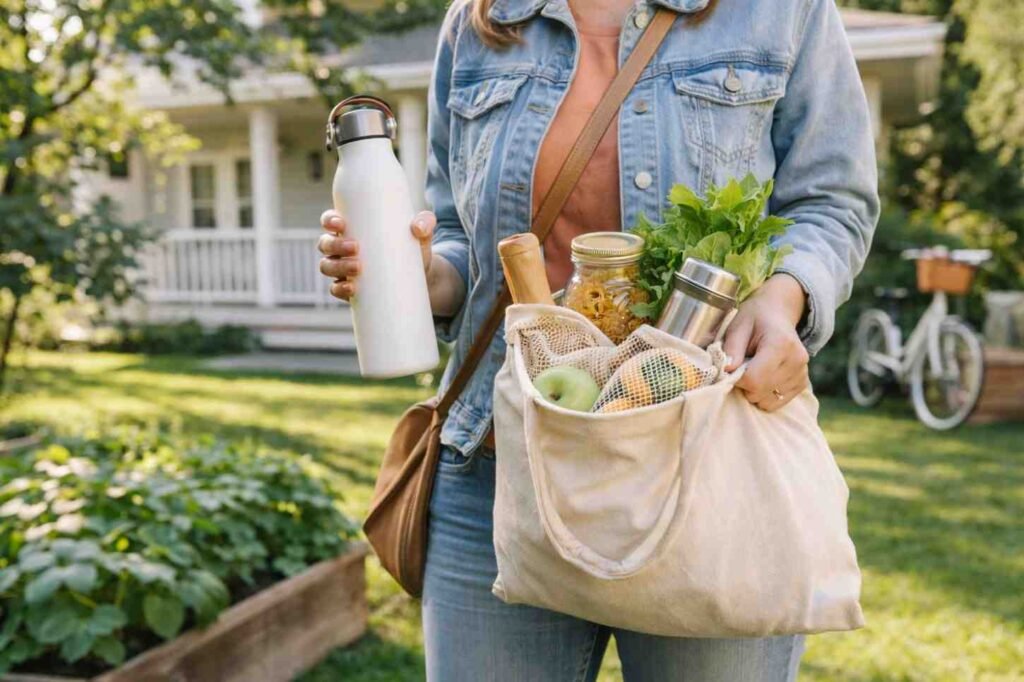
For example, replacing single-use items is one of the easiest entry points. Instead of buying bottled water, switch to a reusable stainless-steel bottle. Keep it visible so you actually use it. The same goes for grocery bags; once you get into the habit, it becomes automatic.
At home, small swaps can quietly reduce both waste and energy use. Switching to LED bulbs lowers electricity consumption, and they last much longer. Even something as simple as choosing bar soap instead of plastic-packaged liquid soap reduces recurring plastic waste.
Food choices also play a bigger role than most people expect. You don’t have to completely change your diet overnight, but gradually adding more plant-based meals into your week can make a noticeable difference. Even cutting back a few days a week is a realistic starting point.
The key is not doing everything at once. Pick a few changes, stick with them, and let them become part of your normal routine.
Turn Sustainable Habits Into A Daily Routine

This is where sustainability stops being a “goal” and starts becoming part of how you live.
One method that works well is habit stacking. Instead of creating new routines from scratch, you attach a new habit to something you already do. For example, if you always leave your house with your keys, keep your reusable bags next to them. Over time, grabbing both becomes automatic.
Energy use is another area where small habits matter. Many devices continue to draw power even when not in active use. Making it a routine to switch off power strips or unplug unused electronics can reduce unnecessary energy consumption without much effort.
Transportation is another everyday decision that adds up over time. For shorter trips, walking or biking can replace driving. When that’s not practical, using shared transport options can still lower your overall impact while fitting into your existing schedule.
None of these changes feels extreme. That’s the point. The easier something is to repeat, the more likely it becomes permanent.
What Makes A Sustainable Lifestyle Last Long-Term

The difference between short-term effort and long-term change usually comes down to how realistic your approach is.
Many people start with strong motivation, but burn out quickly because they try to do too much at once. Daily habits for self-improvement aren’t about perfection. It’s about reducing impact step by step, in ways you can maintain even on busy days.
A few principles help keep things sustainable in the long run:
- Focus on progress, not perfection
- Choose changes that fit your current lifestyle
- Avoid all-or-nothing thinking
- Build habits gradually instead of forcing them
When something feels manageable, you keep doing it. And when you keep doing it, it becomes part of who you are, not just something you’re trying out.
FAQs: How To Start A Sustainable Lifestyle And Make It Part Of Your Routine
1. How do I start a sustainable lifestyle as a beginner?
Start with small, simple changes like using reusable products, reducing waste at home, and being more mindful about what you buy. Focus on consistency rather than doing everything at once.
2. What are the easiest sustainable habits to adopt daily?
Using reusable bags and bottles, switching to energy-efficient lighting, reducing food waste, and unplugging unused electronics are some of the easiest habits to build into your routine.
3. Do I need to spend more money to live sustainably?
Not necessarily. While some products cost more upfront, many sustainable habits like using less, reusing items, and reducing waste actually save money over time.
4. How long does it take to build a sustainable routine?
It depends, but most habits start to feel natural within a few weeks if they are simple and tied to your existing routine. The key is consistency, not speed.
Final Thoughts
A sustainable lifestyle doesn’t come from doing everything perfectly. It comes from showing up every day and making slightly better choices than before. Some days will be easier than others, and that’s completely normal. What matters is that the changes you make are realistic enough to continue, even when life gets busy. Over time, these small actions compound into something meaningful, not just for the environment, but for how you live and consume overall.
Start small, stay consistent, and let it evolve naturally.