
There’s a point where your home looks fine, but it doesn’t feel right. The temperature is slightly off, the lighting feels harsh at night, and something about the space just doesn’t let you fully relax. Most people assume fixing that requires expensive upgrades or full remodels. It usually doesn’t.
Comfort is less about how your home looks and more about how it behaves throughout the day. It’s the way air moves, how light shifts from morning to evening, and whether your space supports your routine instead of working against it. Once you start paying attention to these details, small changes can completely shift how your home feels.
Fix The Basics First: Temperature And Airflow

If a home constantly feels too warm, too cold, or uneven from room to room, no amount of décor will fix that. Comfort starts with how well your space holds and distributes air.
Air leaks are one of the most overlooked issues. Even small gaps around windows, doors, or baseboards can create drafts that make rooms feel uncomfortable without you realizing why. Sealing these areas with simple materials like weatherstripping or foam strips can make an immediate difference.
Temperature consistency matters just as much. A programmable thermostat helps maintain a steady indoor climate without constant manual adjustment. It also reduces those sudden shifts that make a home feel unpredictable.
Ventilation plays a bigger role than most people expect. Stagnant air can make a room feel heavy, especially in humid conditions. Simple additions like portable fans or a dehumidifier improve airflow and make the space feel lighter and easier to live in.
Window treatments are another quiet factor. Thermal curtains help regulate indoor temperature by keeping heat out during warmer months and trapping warmth when it’s cooler. It’s a small change, but one you feel daily.
Rethink Lighting: It Changes Everything

Lighting is one of the fastest ways to shift how a home feels, yet it’s often treated as an afterthought. A single overhead light rarely creates comfort. It flattens the space and can feel too harsh, especially in the evening.
Layered lighting works better because it mirrors how natural light behaves. A mix of floor lamps, table lamps, and subtle accent lighting creates depth and gives you control over how a room feels at different times of the day.
Bulb temperature also matters more than most people realize. Cooler, blue-toned lights can feel clinical. Warmer tones, especially in the 2700K–3000K range, create a softer and more relaxed atmosphere without requiring any major change.
There’s also a sensory side to comfort that often gets ignored. Subtle scents like lavender or bergamot can change how a room feels almost instantly. It’s not about making the space smell strong, just calmer and more balanced.
Make The Space Easier To Move Through

Sometimes discomfort isn’t physical; it’s visual and mental. A space that feels crowded or disorganized can quietly add stress, even if everything technically “fits.”
Decluttering doesn’t mean stripping your home down. It means clearing surfaces that collect unnecessary items and allowing the room to breathe. When countertops and tables are less crowded, the entire space feels lighter.
Furniture layout matters more than people expect. If movement feels blocked or awkward, the room never feels fully comfortable. Small adjustments like opening up walkways or repositioning larger pieces can make daily movement feel smoother.
A few changes that usually make an immediate difference:
- Clear pathways between furniture for easy movement
- Avoid blocking windows or natural light sources
- Keep frequently used items within reach
- Reduce visual clutter on high-use surfaces
These aren’t dramatic changes, but they remove friction from everyday living.
Add Physical Comfort Through Texture

Hard surfaces dominate most homes’ floors, walls, and countertops. Without balance, the space can feel cold even if it looks good.
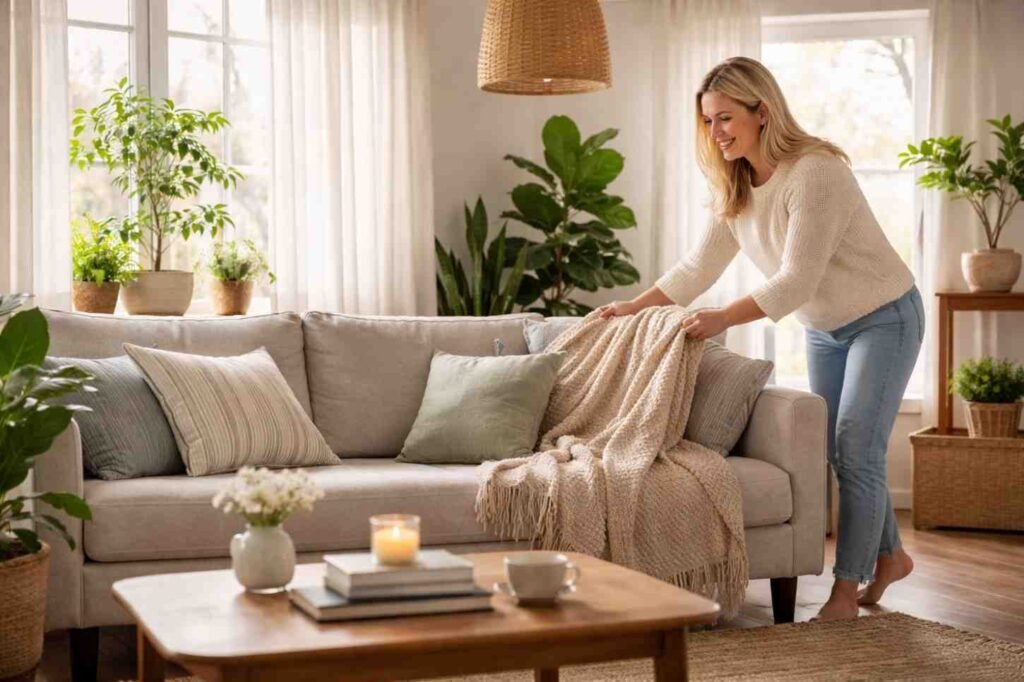
This is where textures come in. Soft elements like rugs, cushions, and throws don’t just add style; they change how a space feels physically. Walking on a rug instead of a bare floor, or sitting with proper support, creates a noticeable shift in comfort.
Bedrooms are especially sensitive to this. Upgrading bedding, even slightly, can improve sleep quality and how rested you feel in the morning. It’s one of the simplest home habits to improve daily comfort without changing the room itself.
Texture also works visually. Layering different materials, such as fabric, wood, and soft finishes, makes a space feel more balanced and less rigid.
Upgrade What You Use Every Day

Some of the biggest improvements come from the smallest upgrades, especially in areas you interact with constantly.
Instead of focusing on big changes, it’s often more effective to update high-touch elements:
- Replace old cabinet handles or drawer pulls
- Swap out a basic showerhead for a more comfortable one
- Upgrade frequently used fixtures like faucets
- Add a fresh coat of paint in calming or neutral tones
These changes don’t require major effort, but they improve how your home functions on a daily basis.
FAQs: How To Improve Comfort In Your Home Without Major Renovations
1. What is the easiest way to improve comfort in your home?
Start with temperature and lighting. Sealing drafts and switching to warmer lighting can create an immediate and noticeable difference without much effort.
2. How can I make my home more comfortable on a budget?
Focus on small changes like rearranging furniture, adding soft textiles, and using better lighting. These are low-cost but high-impact improvements.
3. Does lighting really affect home comfort?
Yes. Lighting influences mood, focus, and how a space feels. Warmer, layered lighting creates a more relaxed and comfortable environment.
4. How do I make my home feel less cluttered without removing everything?
Clear high-use surfaces first and improve storage for everyday items. The goal is to reduce visual noise, not remove personality.
Final Thoughts
Improving comfort in your home isn’t about making dramatic changes. It’s about paying attention to the small things that shape your daily experience, such as how the air feels, how light falls across a room, and how easily you can move through your space. Once those elements are aligned, your home naturally becomes a place where you can relax without thinking about it.
You don’t need a renovation to feel better at home. You just need to adjust what already exists.