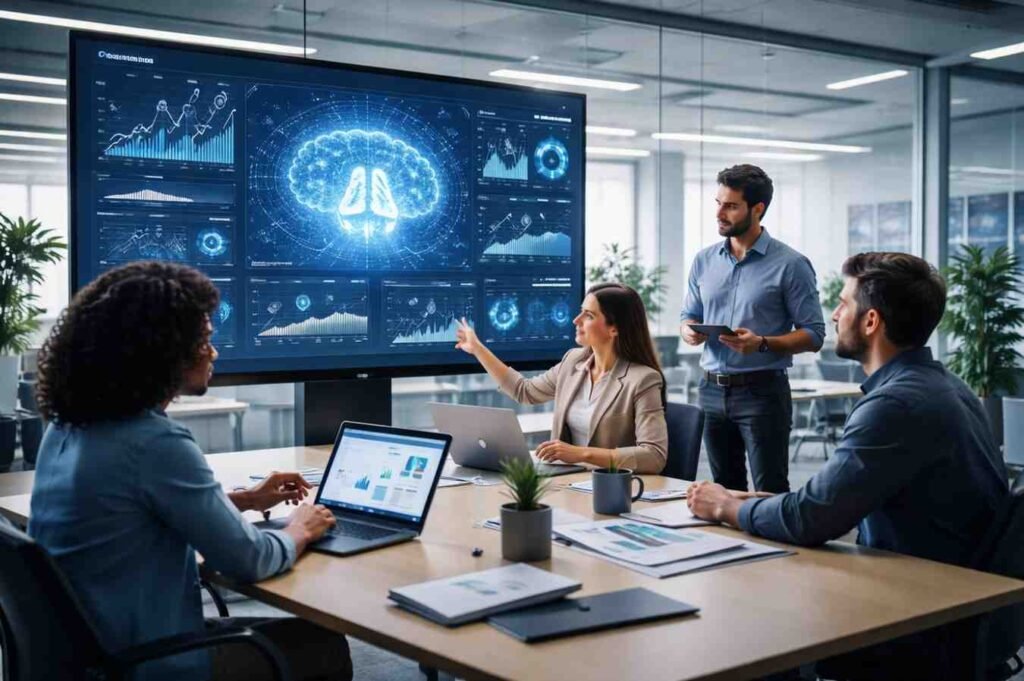
Work used to feel predictable. You showed up, checked your tasks, maybe asked a teammate for help, and moved things forward step by step. Now, that rhythm is shifting. Not slowly but all at once. I’ve seen teams go from juggling spreadsheets and emails to letting systems handle entire processes without constant human input. That shift isn’t just about efficiency. It’s changing how people think about their role at work.
What stands out most is how quickly expectations are evolving. It’s no longer about how fast you can execute tasks. It’s about how well you can guide systems that do the execution for you. Autonomous AI workflows are quietly becoming the layer that sits between people and the work itself, and that’s where culture starts to change.
What Makes Autonomous AI Workflows Different
Traditional automation followed rules. You set conditions, and the system reacted. Autonomous AI workflows go a step further. They interpret context, make decisions, and execute multi-step actions across tools and departments without constant supervision.
This shift is why many organizations now treat AI as part of their operational backbone rather than just a productivity tool. These systems don’t just assist, they act.
And once work starts getting handled this way, people naturally start interacting with work differently.
How Work Culture Is Actually Changing

The “Ask AI First” Habit
One of the most noticeable changes is behavioral. Instead of asking a colleague or manager, people are now asking AI first. Whether it’s drafting a report, analyzing data, or summarizing a meeting, the first instinct has shifted.
This doesn’t reduce collaboration; it changes when it happens. Humans now step in later, when judgment or refinement is needed.
Flatter Teams, Fewer Layers
Middle management has traditionally existed to track performance, assign work, and ensure accountability. But when AI systems can monitor workflows and generate real-time insights, that layer becomes thinner.
Many teams are moving toward:
- Smaller, skill-based groups
- Faster decision cycles
- Less dependency on hierarchical approvals
It creates a more agile environment but also requires people to be more self-directed.
From Doing Work To Directing Work
This is probably the biggest cultural shift. People are no longer valued for completing repetitive tasks. Instead, they’re expected to:
- Define goals clearly
- Guide AI systems toward outcomes
- Review and validate outputs
- Make high-impact decisions
In simple terms, work is moving from execution to orchestration.
Knowledge Is No Longer “Owned”
There was a time when experienced employees held critical knowledge in their heads. That created dependencies. Now, autonomous systems are indexing and organizing that knowledge into accessible formats.
The result:
- New employees ramp up faster
- Teams rely less on specific individuals
- Information becomes searchable and reusable
It’s a subtle shift, but it changes how value is distributed across a team.
What This Looks Like Across Departments
The impact isn’t theoretical; it’s already visible in how different teams operate day to day.
Finance
Financial workflows are becoming continuous rather than periodic. Instead of waiting for month-end reconciliation, systems process transactions in real time with minimal human input. Errors are caught earlier, and reporting becomes more dynamic.
HR
HR teams are using AI workflow automation to predict employee behavior and streamline internal processes. Instead of reacting to issues, they’re identifying patterns early, whether it’s attrition risk or skill gaps.
In many cases, employees are resolving their own queries through AI-driven systems, reducing back-and-forth communication.
IT Operations
IT is seeing one of the biggest transformations. Autonomous systems can detect and resolve issues before users even notice them. Ticketing systems are becoming less reactive and more preventative.
This reduces downtime and frees up IT teams to focus on strategic improvements rather than constant troubleshooting.
Customer Support
Support is shifting from reactive to proactive. Instead of waiting for complaints, systems analyze behavior and resolve potential issues in advance. When human agents do step in, they already have context, making interactions faster and more effective.
The Challenges No One Talks About Enough
For all the progress, there are real friction points, and they’re shaping culture just as much as the benefits.
The Rise Of “Workslop”
When speed becomes the priority, quality can slip. AI-generated outputs often need human cleanup. Teams sometimes end up spending more time refining low-quality drafts than creating something from scratch.
This is how technology creates productivity creates a new kind of workload, less creation, more correction.
Misaligned Expectations
Organizations expect higher productivity with AI, but not all of them have updated how they measure performance or reward employees. That gap can lead to disengagement.
People are doing different work, but are being evaluated the same way.
FAQs: The Real Impact Of Autonomous AI Workflows On Modern Work Culture
1. What are autonomous AI workflows in simple terms?
Autonomous AI workflows are systems that can complete tasks, make decisions, and manage processes with minimal human involvement. They go beyond basic automation by adapting to context and handling multi-step operations.
2. How do autonomous AI workflows affect jobs?
They don’t necessarily eliminate jobs but change them. Routine tasks are reduced, while roles shift toward oversight, decision-making, and managing AI systems.
3. Are autonomous AI workflows reliable?
They are improving rapidly, but not perfectly. Most organizations still rely on human review for critical tasks to ensure accuracy and quality.
4. What skills are important in an AI-driven workplace?
Skills like critical thinking, problem-solving, communication, and the ability to work alongside AI systems are becoming more important than repetitive task execution.
Final Thoughts
The rise of autonomous AI workflows isn’t just a technology shift; it’s a cultural one. Work is becoming less about effort and more about direction. People are expected to think more, decide better, and rely on systems for execution. That can feel uncomfortable at first, especially for teams used to traditional structures. But over time, it creates space for more meaningful contributions and less repetitive work.
The transition isn’t perfectly smooth, and it shouldn’t be treated that way. But it’s already happening, and the teams that adapt to it early are the ones that will shape what modern work looks like next.