
Staying organized at home sounds simple until life gets busy. One long day, a skipped routine, or just plain exhaustion, and suddenly things start piling up again. I’ve noticed it’s rarely about not knowing what to do. It’s about not being able to keep doing it consistently.
Over time, what actually works isn’t a big weekend clean or a sudden motivation boost. It’s the small, almost unnoticeable habits you repeat daily. The kind that takes a few minutes but quietly keeps everything from falling apart. That’s where real organized living starts to feel natural instead of force.
Why Small Home Habits Matter More Than Big Cleanups
Most people rely on occasional deep cleaning to reset their space. It feels productive in the moment, but it doesn’t last. Within days, clutter creeps back in because the daily systems aren’t in place.
What changes things is shifting your mindset:
- From cleaning occasionally to maintaining daily
- From perfection to consistency
- From effort-heavy routines to light, repeatable habits
When your home is changing through small habits, it doesn’t fall apart in the first place. That alone reduces stress and saves time.
Daily Home Habits For Organized Living That Actually Work

The habits below are simple, but they’re powerful because they fit into real life without adding pressure.
The One-Touch Rule
Instead of handling the same item multiple times, deal with it immediately. Mail, bags, clothes, and anything that enters your space should be sorted or put away right away.
This single daily home habit cuts down the biggest source of clutter: delayed decisions.
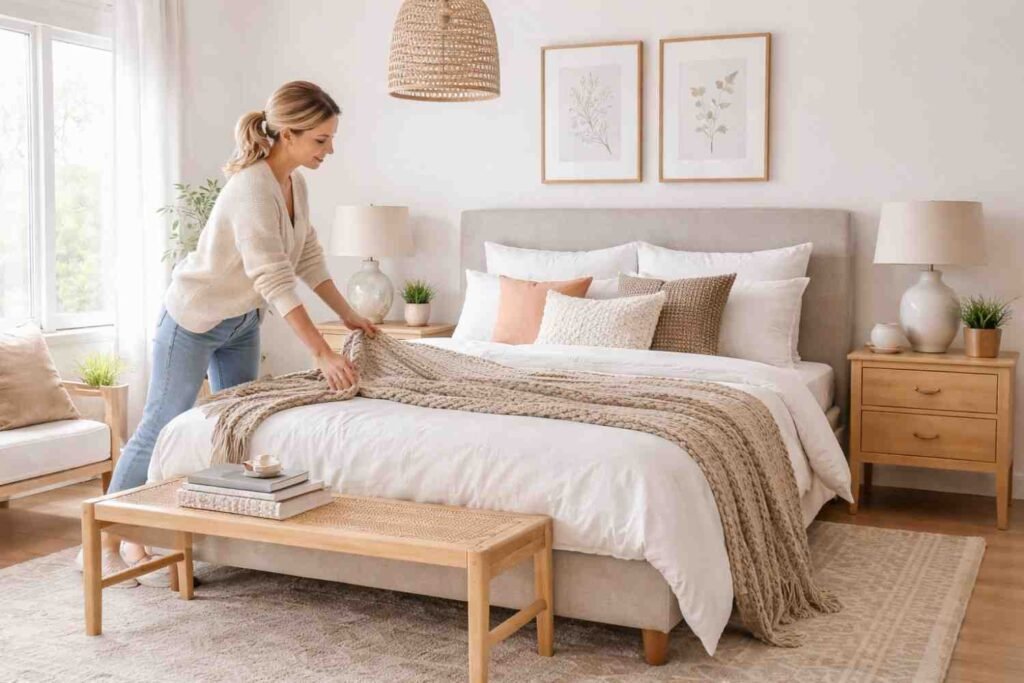
Make Your Bed Every Morning
It takes less than two minutes, but it changes how your space feels instantly. A made bed creates a visual reset that carries into the rest of the room.
It’s not about perfection; it’s about starting the day with a small win.
Clean As You Go
Whether you’re cooking, working, or getting ready, clean small messes in real time, wipe counters, rinse dishes, and put things back immediately.
This prevents the “end-of-day mess” that often feels overwhelming.
The Two-Minute Rule
If something takes less than two minutes, do it now. Hanging a coat, loading a dish, putting shoes away, these tiny actions stop clutter before it builds.
The Five-Minute Evening Reset
Before you wind down, spend five minutes putting things back in place. Clear surfaces, fold blankets, tidy key areas.
This habit is underrated. It helps you wake up to a calm space instead of yesterday’s chaos.
Create Systems That Make Organization Easier

Habits alone aren’t enough. Your home needs a structure that supports those habits naturally.
Give Everything a Fixed Place
If something doesn’t have a designated spot, it will always end up as clutter. When every item has a “home,” putting things away becomes automatic.
Set Up a Drop Zone
Keys, bags, and mail these items usually create a mess near entry points. A simple drop zone keeps everything contained in one place instead of spreading across the house.
Use the Container Approach
Instead of adding more storage, limit what fits into a space. A shelf or bin should act as a boundary. When it’s full, it’s a signal to remove something, not add more.
Keep a Donation Box Ready
One of the easiest ways to stay organized is to constantly remove what you don’t need. A small box for donations makes this a habit instead of a big task.
How To Stay Consistent With Organization Habits

Starting habits is easy. Staying consistent is where most people struggle. These simple frameworks make a big difference.
Use Habit Stacking
Attach a new habit to something you already do:
- Tidy the bathroom after brushing your teeth
- Clear the kitchen while your coffee brews
- Put things away before sitting down to relax
It removes the need to “remember” because it becomes part of an existing routine.
Try the 5-5-5 Reset.
On days when everything feels messy, don’t overthink it:
- Put 5 things back
- Throw away 5 things
- Set aside 5 items to donate
It’s quick, manageable, and keeps things from spiraling.
Plan Your Week Lightly
A short weekly reset helps everything run smoother:
- Plan meals
- Outline basic chores
- Reset key areas
This doesn’t need to be perfect. It just keeps your week from feeling chaotic.
Let Go of Perfection
Some days will be messy. That’s normal. What matters is coming back to your routine the next day.
Consistency isn’t about doing everything right. It’s about not giving up when things slip.
Common Mistakes That Break Consistency

Even with good intentions, a few patterns can quietly undo your progress:
- Trying to do too much at once
- Relying only on motivation
- Not having systems in place
- Ignoring small clutter until it builds up
The fix isn’t more effort; it’s simplifying your approach so it fits into everyday life.
FAQs: Home Habits For Organized Living That Help You Stay Consistent
1. How long does it take to build home organization habits?
Most habits start feeling natural within a few weeks, but consistency improves over time. The key is repeating small actions daily instead of relying on big efforts.
2. What is the easiest habit to start with?
Making your bed and following the two-minute rule are the easiest starting points. They require minimal effort but create an immediate visible impact.
3. How do I stay organized with a busy schedule?
Focus on micro-habits like cleaning as you go and doing quick resets. These take little time but prevent mess from building up.
4. Do I need a strict cleaning schedule to stay organized?
Not necessarily. Light structure helps, but flexible routines built on daily habits are more sustainable than strict schedules.
Final Thoughts
Staying organized isn’t about doing more; it’s about doing things differently. When your home runs on small, repeatable habits, everything feels lighter. You spend less time catching up and more time actually living in your space. Over time, these habits stop feeling like effort and start becoming part of your normal routine.
Consistency doesn’t come from motivation. It comes from keeping things simple enough to repeat, even on your busiest days.