Opening your closet and feeling like you have nothing to wear is strangely common, even when the shelves are full. I’ve noticed that the issue usually isn’t the number of clothes. It’s how those clothes are used. When everything is worn the same way every time, even good pieces start to feel boring.
Minimal style works differently. Instead of chasing new items, it focuses on using what already exists in smarter ways. Small styling adjustments, thoughtful combinations, and a bit of wardrobe awareness can turn familiar pieces into outfits that look intentional and polished. The interesting part is that once you learn a few tricks, your closet suddenly feels much bigger than it actually is.
Why Minimal Style Often Looks More Put Together

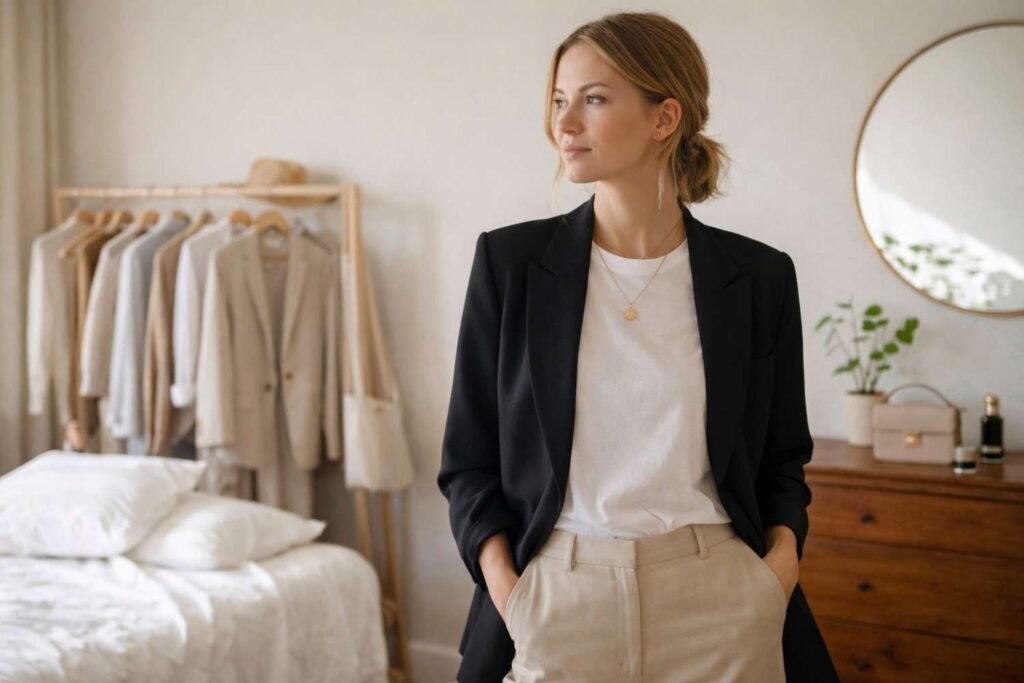
Minimalist fashion isn’t about wearing fewer clothes just for the sake of it. The real goal is clarity. When outfits are built from versatile pieces that work together, everything starts to look more cohesive.
Many people who develop a minimalist wardrobe discover a few practical benefits:
- Getting dressed becomes faster and less stressful
- Most items mix and match easily
- Outfits look more intentional and balanced
- Clothes last longer because they’re chosen carefully
Minimal dressing also reduces decision fatigue. Instead of sorting through dozens of random options, you work with a smaller group of reliable wardrobe staples that consistently look good together.
Styling Tricks That Instantly Make Simple Clothes Look Better

Minimal style relies heavily on small adjustments. Tiny details can completely change how an outfit feels.
The Half-Tuck
Sometimes called the waist-defining tuck, this simple move makes casual outfits look styled rather than accidental. Tuck only the front of a shirt or sweater into your jeans or trousers while leaving the back loose.
It adds shape to the outfit and prevents basic pieces from looking flat.
Strategic Unbuttoning
Button-down shirts are far more versatile than most people realize. Instead of wearing them fully buttoned every time, try these variations:
- Leave a few buttons open over a basic tee
- Wear the shirt fully open like a light jacket
- Button only the middle section and leave the collar relaxed
These subtle shifts instantly change the silhouette.
Rolling Sleeves Or Cuffing Pants

Rolling sleeves or cuffing trousers creates a slightly tailored look without altering the garment permanently. Showing a bit of wrist or ankle often makes outfits appear cleaner and more modern.
Shoulder Draping
Draping a sweater over your shoulders instead of wearing it normally adds structure and dimension. It works especially well with simple outfits like a button-down and jeans.
The Scarf Belt Trick
A scarf threaded through belt loops or tied around the waist can add visual interest while still keeping the outfit minimal. It’s a creative way to repurpose accessories already sitting in the closet.
The 3-3-3 Styling Rule That Makes Clothes Multiply
One helpful method for learning how to dress minimal but stylish is the 3-3-3 rule. It proves how much variety can come from a very small number of pieces.
The idea is simple: select nine items from your closet and build outfits from them.
- 3 tops – for example, a white shirt, black tee, and light sweater
- 3 bottoms – such as jeans, tailored trousers, and a skirt
- 3 shoes – casual sneakers, loafers, or boots, and an everyday neutral pair
Even with only nine pieces, dozens of outfit combinations become possible. A white shirt that feels ordinary suddenly looks different when paired with trousers one day and layered under a sweater the next.
The rule isn’t meant to permanently limit your wardrobe. It simply shows how much potential already exists in the clothes you own.
Curating Your Closet So Everything Works Together

A minimalist wardrobe doesn’t mean throwing everything away. It means understanding which pieces actually work.
Focus On Fit First
Fit is one of the biggest factors that determines whether clothes look stylish. A daily habit of a well-fitting shirt or pair of jeans instantly looks more intentional than something oversized or awkwardly tight.
Sometimes a simple tailoring adjustment can transform an average piece into a favorite.
Stick To A Core Color Palette
Minimal wardrobes often revolve around neutral colors because they combine easily. Shades like black, white, navy, beige, gray, and denim naturally work together.
When most items share a similar palette, mixing outfits becomes effortless.
Identify Multi-Purpose Pieces
A useful test is the three-outfit rule. If a piece can’t realistically create at least three different outfits, it probably isn’t pulling its weight in the wardrobe.
Versatile clothing is the foundation of minimalist fashion.
Take Care Of What You Own
Clothes that are clean, pressed, and well-maintained automatically look more refined. Even a simple T-shirt looks elevated when it’s lint-free and paired with well-kept shoes.
Minimal style often feels expensive simply because the details are looked after.
Simple Outfit Formulas That Always Work

When people start dressing more minimally, they often rely on a few dependable outfit formulas. These combinations consistently look polished without needing much effort.
Modern casual classic
A crisp button-down tucked into straight-leg jeans with simple sneakers or loafers. Adding a structured jacket immediately sharpens the look.
Effortless weekend outfit
A basic tee paired with relaxed jeans and clean sneakers. Rolling the sleeves slightly or adding a lightweight jacket makes the outfit feel styled rather than thrown together.
Layered everyday look
Start with a plain T-shirt, add a button-down or knit layer, and finish with a denim jacket or trench coat. The layers create depth while still keeping the outfit simple.
Once you start recognizing these formulas, getting dressed becomes almost automatic.
FAQs: How To Dress Minimal But Stylish Without Buying More Clothes
1. How do you start dressing minimal without buying new clothes?
Begin by identifying versatile pieces you already wear often. Focus on combining them in new ways, simplifying color choices, and using layering techniques to create fresh outfits.
2. What colors work best for minimalist outfits?
Neutral colors such as black, white, navy, gray, beige, and denim are the easiest to mix and match. These shades allow multiple outfit combinations without clashing.
3. Can minimalist fashion still look stylish?
Absolutely. Minimal style often looks more refined because outfits rely on fit, balance, and subtle details rather than loud trends or excessive accessories.
4. How many clothes do you actually need for a minimalist wardrobe?
Many people find that around 25–40 versatile pieces are enough for daily outfits. The exact number varies, but the key idea is choosing pieces that work together consistently.
Final Thoughts
Learning how to dress minimal but stylish isn’t really about owning fewer clothes. It’s about seeing the clothes you already have in a new way. Once you start paying attention to fit, color coordination, and simple styling tricks, even the most familiar pieces begin to feel different. A shirt that once felt ordinary suddenly becomes part of several outfits, and jeans you’ve owned for years look fresh with a new layering approach.
Minimal style quietly shifts the focus away from constant shopping and toward creativity. When you learn to work with what’s already in your closet, your wardrobe becomes simpler, more flexible, and surprisingly more stylish.